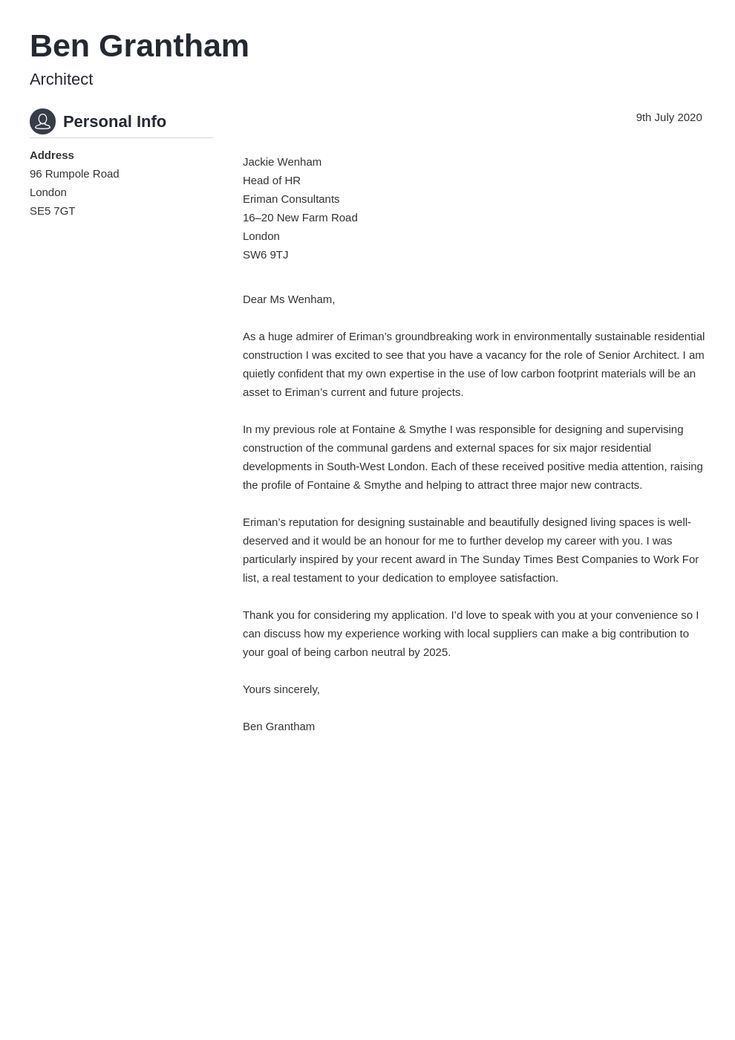
Cover Letter UK Example
A cover letter is a crucial document that accompanies your CV or resume when applying for a job in the UK. It provides an opportunity to tailor your application to the specific role and company, and to highlight your relevant skills and experience. In essence, it's a persuasive letter that sells your unique fit for the job.
Crafting a compelling cover letter is not just about listing your qualifications, but about telling your professional story and demonstrating why you would make a valuable addition to the team. Let's delve into some key aspects and examples of writing a cover letter in the UK.
UK Cover Letter Format andtono
The UK follows a formal, professional tone when it comes to cover letters. Start with 'Dear Hiring Manager,' or 'Dear [Hiring Manager's Name],' if known. End with 'Yours sincerely,' followed by your full name. Use a formal, clear font like Arial or Calibri, and save your document as a PDF to ensure consistency across different devices and platforms.


Sanctions should be in place to ensure that these provisions are fully implemented. The UK authorities should provide regular updates on the progress made in implementing the agreement and about other issues related to the conflict."
Cover Letter Format
Your cover letter should consist of three paragraphs (excluding your closing salutation). The first paragraph should mention the specific role you're applying for and how you found the listing. The second paragraph should summarise your most relevant experience and skills for the job. The third paragraph should express your enthusiasm for the role and company, and provide a call-to-action for the hiring manager.


For example, you might write: 'Dear Hiring Manager, I am writing to express my interest in the Marketing Coordinator role advertised on LinkedIn. With my proven track record in digital marketing campaigns and event management, I am confident that my skills and passion make me an excellent fit for your team.'
Tailoring Your Cover Letter
Tailoring your cover letter to each job application shows that you've taken the time to understand the role and company. Research the company's mission, values, and recent projects to demonstrate that you understand their needs and goals. Highlight specific skills or experiences from your background that match the job description.
For instance, you might refer to a company's recent product launch and explain how your project management skills and understanding of the target market would have contributed to its success.


Writing a Compelling Cover Letter
A compelling cover letter goes beyond simply reciting your qualifications. It tells a story about your career trajectory, explains why you're passionate about the role, and demonstrates how you can contribute to the company's success.
Use active voice and action verbs to paint a picture of your capabilities. Highlight achievements rather than just responsibilities. For example, instead of saying 'Responsible for increasing sales,' say 'Spearheaded a marketing campaign that increased sales by 20%.'
The Hook
The opening line of your cover letter should grab the hiring manager's attention. This could be a unique fact about yourself, a relevant achievement, or a question that demonstrates your enthusiasm for the role.


For example, you might start with: 'Did you know that a well-crafted cover letter can increase your chances of landing an interview by up to 50%? Let me tell you why I believe I am the perfect fit for your Marketing Manager role...'
Highlighting Relevant Skills
Your cover letter is not the place to list every skill you have. Instead, focus on the skills and experiences that are most relevant to the role. Use keywords from the job description to show that you've done your homework.
For example, if the job description mentions 'strong communication skills,' you might write: 'Thanks to my excellent communication skills, honed over five years in customer-facing roles, I am adept at building relationships and driving consensus...'
Remember, your cover letter is just the beginning of your conversation with the hiring manager. Its purpose is to pique their interest and move you onto the next stage of the application process. Keep it concise, compelling, and tailored to each role. Good luck!
Related Articles

Mastering Legal Cover Letter UK: Example & SEO-Friendly Tips
When applying for jobs in the UK, a well-crafted legal cover letter can significantly increase your chances of success. These letters aren't just formalities...

Cover Letter Legal Counsel Example
Crafting a compelling cover letter for a legal counsel position requires a delicate balance of aggression, accuracy, and advocacy. The purpose of a cover...

Mastering the Legal Secretary: A Cover Letter Example
Закончив трудовой день, Гарольд возвращается домой. Он выключает свой ноутбук, собирает расписки и заканчивает некоторые административные задания. Несмотря на...

Mastering the Art: Example Cover Letter for Resume
Crafting a compelling cover letter is a crucial step in your job search journey. It provides an opportunity to personalize your application,highlight your...
"Mastering Cover Letter Writing: A Resume-Matching Example"
Crafting a compelling cover letter to accompany your resume is a crucial step in your job application process. However, many job seekers struggle with how to...

Master Legal Cover Letter: A Compelling Example & Tips
Crafting a compelling cover letter is a critical step in your job application process, especially when applying for legal positions. A well-written cover...