What to Do with a Slanted Backyard: Ideas & Solutions
Do you find your slanted backyard a challenge? It doesn't have to be. Transforming a sloped yard into a functional and enjoyable space is not only possible, but it can also add value to your property. Here, we'll explore what to do with a slanted backyard, starting with the basics of planning and assessments, then delving into landscaping ideas, leveling options, and maintenance tips.
Before you grab your garden gloves, it's crucial to understand that working with a slanted yard requires careful planning and sometimes professional help. Start by assessing your yard's slope, noting any low-lying areas prone to waterlogging or high spots that might cause erosion. Also, consider the intended use of your space, existing features, and local building codes.
Understanding Your Slope
Consult a topographic map or hire a surveyor to determine the exact slope of your backyard. Slopes are measured in percentage, with steeper slopes having higher percentages. Understanding your slope helps you choose the right solution.


Slope categories include gentle (less than 15%), moderate (15-30%), and severe (over 30%). Gentle and moderate slopes can usually be worked with using landscaping techniques, while severe slopes may require retaining walls or slope stabilization.
Gentle and Moderate Slopes
For gentle to moderate slopes, your goal is to create interest and blend the natural grade with your landscape design. You can achieve this with planting, terracing, and creative hardscaping.


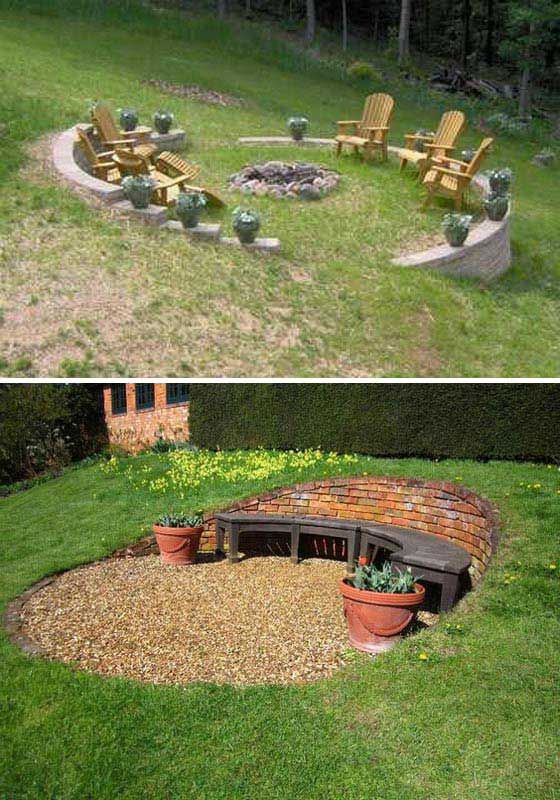
For example, create planting pockets along the slope, using hardy plants that can anchor the soil. Establish a rock garden with stones and low-growing, drought-tolerant plants. You can also build a low retaining wall to create a level area for a patio or garden.
Severe Slopes
Severe slopes require major interventions. Retaining walls can stabilize the slope and transform it into usable space. Consult a structural engineer or professional landscaper to design and install walls that can withstand pressure and prevent erosion.
Another option is to grade the slope, but this is an intensive process involving excavation, soil movement, and possibly outdoor grading permits. It also increases the risk of soil instability and runoff.


Landscaping Ideas for Sloped Yards
With the right approach, you can create beautiful and functional spaces on sloped yards. Always prioritize safety and stability, and work with the natural grade instead of against it.
Here are some creative landscaping ideas:
- Stairs and Paths: Make your slope accessible with stone or brick stairs, or a meandering pathway that follows the natural contour.
- Tiers and Terraces: Create separate levels with retaining walls, transforming the slope into stole balcony gardens.
- Banks and Berms: Build up the base of the slope to create a flat area, planting the upslope side with ground covers to prevent erosion.
- Water Features: Incorporate a waterfall, stream, or fountain to soften the slope and create an attractive focal point.
Planting Steep Slopes
Choosing the right plants is crucial for stabilizing a slanted yard. Opt for low-maintenance, hardy plants that can hold soil and withstand occasional neglect. Ground covers, shrubs, and native plants are excellent choices.




Consider plants with extensive root systems like ivy, clover, and vinca. They anchor the soil and help prevent erosion. Also, incorporate a mix of textures and heights for visual interest, and group plants based on similar water and light requirements.
Maintaining Sloped Yards
Maintaining a sloped yard can take more effort than a flat one, but with the right practices, it can be manageable. Regularly check for erosion, especially during heavy rains, and make repairs as needed.
Mulch around plants to help retain moisture and suppress weeds. Keep grass short to avoid runoff and trampling. Also, prune trees and bushes as needed to promote airflow and prevent overgrowth that could destabilize the slope.
A slanted backyard doesn't have to be an eyesore or a headache. With careful planning, clever design, and mindful maintenance, it can become a beautiful, unique, and functional space. Embrace its natural character, and let it inspire your creativity. Who knows, you might just end up loving your slanted backyard even more than a flat one!
Related Articles

Transform Your Yard: Landscaping Ideas for Large Rocks
Having large rocks in your yard can be a landscaping challenge. However, instead of viewing them as mere obstacles, consider them as unique opportunities to...

Transform Your Space: Large Backyard Landscaping Ideas
Transforming a large backyard into an oasis tailored to your lifestyle is an exciting endeavor. With creative large back yard landscaping ideas , you can...
Level Up Your Yard: Transforming Slanted Spaces
Discovering a slanted yard can be a real headache for homeowners. It not only makes maintenance tasks like mowing a challenge but also raises concerns about...

Stone Fire Pit Ideas: Elevate Your Backyard
When it comes to transforming your outdoor spaces into cozy, inviting havens, few elements can rival the allure of a fire pit. And when paired with the...

Backyard Ideas: Transform Your Space with Pools
Transforming your backyard into a personalized oasis is an exciting project that adds value to your home and enhances your lifestyle. Especially for pet...

Transform Your Yard: Top Landscaping Ideas for a Dream Backyard Garden
Transform your backyard into a lush oasis with these captivating landscaping ideas. By thoughtfully combining plants, hardscapes, and outdoor features, you can...