when to use mri vs ct scan

When MRI or CT Scan: Choosing Wisely

By Robert Smith
AD

When choosing between an MRI (Magnetic Resonance Imaging) and a CT scan (Computed Tomography), it's essential to understand the unique strengths and limitations of each to ensure you receive the most appropriate medical imaging test. Both procedures are non-invasive, use advanced technology, and can provide detailed images of internal body structures. However, they work differently and are best suited for specific situations.

Before delving into when to opt for an MRI or a CT scan, let's briefly understand how each works. A CT scan uses X-rays to create cross-sectional images of the body, while an MRI uses a powerful magnetic field, radio waves, and a computer to produce detailed images. Now, let's explore the ideal scenarios for each, along with their benefits and drawbacks.

When to Consider an MRI

Magnetic Resonance Imaging (MRI) is an excellent choice when soft tissue structures need to be visualized in detail. This includes organs, muscles, tendons, and ligaments, which may not show up clearly on a CT scan. MRI is also preferred for detecting brain and spinal cord anomalies, as it can provide clear images of the nervous system without using ionizing radiation.

AD
MRI vs CT Scan: What’s the Difference? | MRI Labs
What's The Difference Between MRI and CT Scans?
CT Scan vs MRI vs X-Ray: Differences, Uses and Medical Imaging Guide

MRI is typically the first choice for conditions such as:

  • Stroke or other brain-related disorders
  • Spine and spinal cord issues
  • Joint problems, particularly for the knees, hips, and shoulders
  • Cancer, especially for staging and monitoring
  • Disc herniation or other spinal issues

MRI: Pros and Cons

Benefits: Non-ionizing radiation, high soft tissue contrast, excellent for detecting subtle changes in the body's structures, and can acquire multiple slices or planes of view.

search.app
search.app
MRI VS CT SCAN - TMJ Hope
MRI vs CT Scan: Differences, Uses & Safety Comparison | medicalimagingsource.com

Drawbacks: Longer scan times, can be claustrophobic for some patients, requires lying still for an extended period, and is more expensive than a CT scan.

When to Consider a CT Scan

Computed Tomography is better suited for visualizing bones, finger fractures, and other hard tissue structures. It's also the imaging method of choice for emergency situations, like traumas or internal bleeding, due to its speed and accessibility in most hospitals. CT scans are typically preferred for:

AD
  • Lung and chest-related conditions
  • Bone fractures or other orthopedic injuries
  • Internal bleeding or blood clots
  • Abdominal pain or digestive issues
  • Evaluating the extent of infections or inflammation

CT Scan: Pros and Cons

Benefits: Quick scanning times, easily accessible, provides excellent images of bone structures, and can be used with contrast media to enhance visibility of blood vessels or other structures.

CT vs MRI: Understanding Your Imaging Options | Best MRI Scan Center in Mohali – Kior Healthcare
CT Scan (CAT Scan) Procedure Side Effects, Purpose, CT vs. MRI
MRI vs CT Scan: Which One Do You Actually Need?
MRI vs CT Scan vs X-Ray | Key Differences Explained
MRI vs. CT Scan: What’s the difference?
Difference Between X-Ray, CT Scan, and MRI

Drawbacks: Involves exposure to ionizing radiation, may not be as detailed with soft tissue as an MRI, and might not be suitable for patients with certain allergies or kidney issues if contrast media is required.

Ultimately, the decision to choose an MRI or a CT scan should be made in consultation with your healthcare provider. They will consider your medical history, symptoms, and other factors to determine the most appropriate test for your specific situation. By understanding the strengths and limitations of each procedure, you can be more involved in your healthcare journey. So, the next time you're faced with the question, "When to use MRI vs CT scan?" you'll have a solid foundation for making an informed decision.
AD
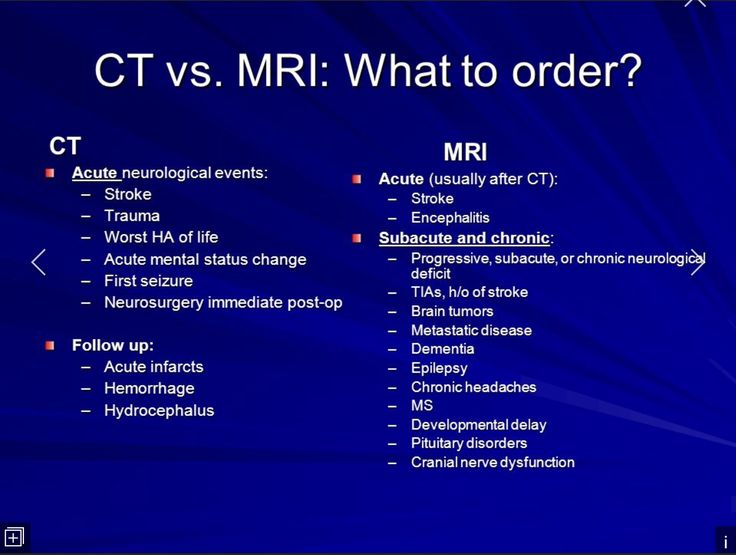
Ct vs MRI Ct Vs Mri, Understanding Mri Imaging Terms, Mri Study Notes, Mri Study Guide, What Are The Different Types Of Mri, Types Of Mri Scans, Mri Scan Comparison, Mri Cpt Codes, Mri Tech
Engineering - Medical imaging plays a vital role in diagnosing a wide range of health conditions. Three of the most commonly used imaging techniques are MRI, CT scan, and X-ray, each with specific strengths and purposes. Understanding how they work and what they are best used for can help patients and caregivers make informed decisions. MRI (Magnetic Resonance Imaging) is best for detailed images of soft tissues. It uses strong magnetic fields and radio waves to produce high-resolution pictures of organs, muscles, ligaments, and the brain. MRIs are particularly useful when doctors need to examine soft tissue injuries, brain abnormalities, spinal cord problems, or joint and ligament conditions. Unlike X-rays and CT scans, MRIs do not use ionizing radiation, making them safer for repeated imaging in certain cases. CT Scan (Computed Tomography) combines X-ray images taken from different angles and uses computer processing to create cross-sectional images of bones, blood vessels, and soft tissues. CT scans are excellent for detecting bone fractures, internal bleeding, organ injuries, tumors, and infections. They provide more detail than a regular X-ray and can help doctors quickly assess trauma cases, making them crucial in emergency situations. X-ray is the most widely known and simplest imaging technique. It is primarily used to view bones and detect fractures, dislocations, infections, or abnormalities in the chest, such as lung problems. X-rays work by passing a controlled amount of radiation through the body to create an image of the structures inside. They are quick, cost-effective, and widely available, making them a first-line tool for many conditions, though they provide less detail for soft tissues compared to MRI or CT scans. In summary, MRI, CT scans, and X-rays are complementary tools in modern medicine. MRIs are ideal for soft tissue and detailed organ imaging, CT scans provide comprehensive views of bones and internal structures with high accuracy, and X-rays are quick, effective, and primarily used for skeletal and chest examinations. Choosing the right imaging technique depends on the patient’s condition, the part of the body being examined, and the level of detail required. Together, these imaging methods allow doctors to diagnose accurately, plan treatments, and monitor recovery effectively. #mri #medical #medicine #health #science #fblifestyle | Facebook
What's the Difference Between a CT Scan and MRI? — Health
X-Ray vs MRI vs CT Scan Explained 🩻 | Medical Imaging Comparison
x - ray and mri vs ct scan comparison infographical poster for medical practice
CT Scan vs. PET Scan - Health Images
CT scans and MRIs: What’s the Difference?
three different types of mris are shown in this diagram, and each one is labeled with
Preparing For An MRI Scan | What To Expect And Tips On How To Prepare
The Differences Between the CAT Scan and the MRI Scan
MRI Scan Parameters Trade-Offs
What No One Tells You About Contrast in CT and MRI Scans
Ct Vs Mri, How To Read A Ct Scan, How To Read Mri Scans, Mri Imaging Process Explanation, Types Of Mri Scans, Mri Scan Comparison, Understanding Mri Equipment, Mri Vs Ct Scan, What Are The Different Types Of Mri Scans
AD