"Slope-Smart Fire Pit Ideas for Your Yard"
Picture this: you've just moved into your dream home with a sprawling, sloped backyard. It's beautiful, but you yearn for cozy gatherings under the stars. A fire pit could be the perfect solution, but how to accommodate it in a sloped yard? Let's delve into the captivating world of fire pit placement on sloped terrains.
Sloped yards present a unique challenge, yet they also offer opportunities for creative and functional design. A well-placed fire pit can transform your backyard into an enchanting oasis, enhancing your outdoor living space. So, let's dive into the art of positioning a fire pit on a sloped yard.
Understanding the Slope
Before diving into fire pit placement, it's crucial to understand your yard's slope. Measuring the slope percentage will guide your design strategy. Here's how you can do it: measure two points on a level surface, then measure the vertical and horizontal distances between them. The slope percentage is (rise/run)*100.


Once you have the slope percentage, you can start planning. Less than 20% is a gentle slope, 20-30% is moderate, and above 30% is a steep slope. Each range presents unique considerations for fire pit placement.
Gentle Slopes: Retaining Walls and Terraces
Gentle slopes are ideal for creating terraces with retaining walls. A fire pit can be the focal point of one of these terraces. Retaining walls can be built around the fire pit, keeping the area safe and attractive. Consider using materials matching your home's exterior for harmonious design.
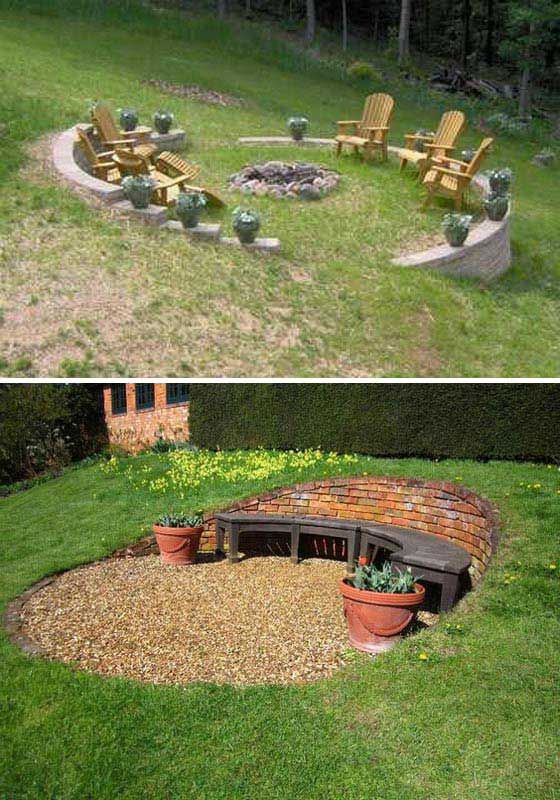


Pro tip: Ensure the retaining wall and fire pit are level for safety and aesthetics. Use a laser level or transit level for precise measurements.
Moderate Slopes: Building a Fire Pit Platform
For moderate slopes, digging into the hillside can create a platform for the fire pit. This approach levels the playing field - literally. Fill the excavated area with gravel for drainage, then build your fire pit on a level foundation. Surround it with seating walls or steps leading up to it.
Remember, safety is paramount. Ensure the fire pit is far from trees, overhanging branches or structures, and that the area around it is clear of flammable materials. Always follow local building codes and get any necessary permits.


Positioning for Privacy and View
When positioning your fire pit, consider privacy and views. If you enjoy stargazing, position the fire pit away from trees or structures that might obstruct the view. On the other hand, if you want to screen your gatherings from neighbors, place the fire pit behind a hedge or fence.
Lighting and Visibility
Lighting is another critical aspect. Place the fire pit where it can be safely seen from the house. Consider adding landscape lighting to illuminate paths leading to the fire pit and accentuate nearby plants or features. This not only enhances safety but also creates a warm, inviting atmosphere.
Safety tip: Always keep a fire extinguisher nearby when using your fire pit. Ensure it's easily accessible and everyone knows how to use it.


Creating a Focal Point
No matter the slope, your fire pit should be the focal point of your outdoor space. Position it in a central location, keeping in mind its size, shape, and design. It should complement, not overwhelm, the surroundings. Symmetry is key - ensure the fire pit is centrally located between seating areas or other features.
Once you've selected the perfect location, it's time to start building or installing your fire pit. Remember, the key to a successful fire pit on a sloped yard is careful planning and creativity. With the right strategy, you can create a stunning, functional, and safe outdoor space for you and your loved ones to enjoy.
So, go ahead, measure that slope, start dreaming, and watch as your backyard sloped dreams become a reality. Don't forget to follow safety guidelines and enjoy your newly transformed, cozy, and enchanting outdoor space.
Related Articles

Sloped Yard Landscaping Ideas: Transform Your Slope
Tired of navigating a bumpy terrain every time you step into your yard? Consider transforming your sloped yard into a functional and visually appealing space...
Fire Pit Ideas for Sloped Yards
Transforming a sloped backyard into a cozy, inviting space might seem challenging, but a fire pit can be the perfect solution. Not only do they provide warmth...

Transform Your Large Sloped Yard: Ideas & Solutions
If you're the proud owner of a large sloped yard, you've likely experienced the unique challenges and immense potential that comes with such a landscape. From...

Slope Your Yard on a Budget: Creative Ideas for Incline
If you've recently become a proud homeowner, you might be wondering how to transform your sloped yard into an inviting and functional space that both you and...
Fire Pit Ideas for Sloped Yard
Embracing the natural incline of your sloped yard adds charm and character. But when it comes to entertaining or simply enjoying your outdoor space, finding...

"Transform Your Sloped Front Yard: 20 Small, Chic Landscaping Ideas"
Transforming a small, sloped front yard into a welcoming and functional space is a challenge that many homeowners face. However, the right landscaping ideas...