Understanding Turning Chains in Crochet: A Beginner's Guide
Embarking on your crochet journey can be incredibly rewarding, but it's also packed with new terms and techniques to learn. One such term you might come across is 'Turning Chain'. If you're a beginner, you might be wondering what this is and why it's important. Let's dive right in!
In simple terms, a turning chain in crochet is a series of chains that you create at the beginning of a new row to ensure that your stitches don't twist. It's a small action that makes a big difference in maintaining the right tension and direction of your crochet work. Now, let's break this down further.
Understanding the Turning Chain
The magic of the turning chain lies in its purpose. It's designed to help you switch from one row of stitches to another, maintaining tension and alignment.


Imagine you're working on a row of stitches. Once you've completed it, you need to turn your work to start a new row. This is where the turning chain comes in. It helps you to 'turn' your work without losing the tension or direction of your stitches.
Creating a Turning Chain
Creating a turning chain is surprisingly simple. After completing a row, you'll need to chain the number of stitches that equals the multiple of the stitch you're working with. For example, if you're working in single crochet (SC), you'll need to create a chain that's one less than the multiple of the number of SCs you're working with.


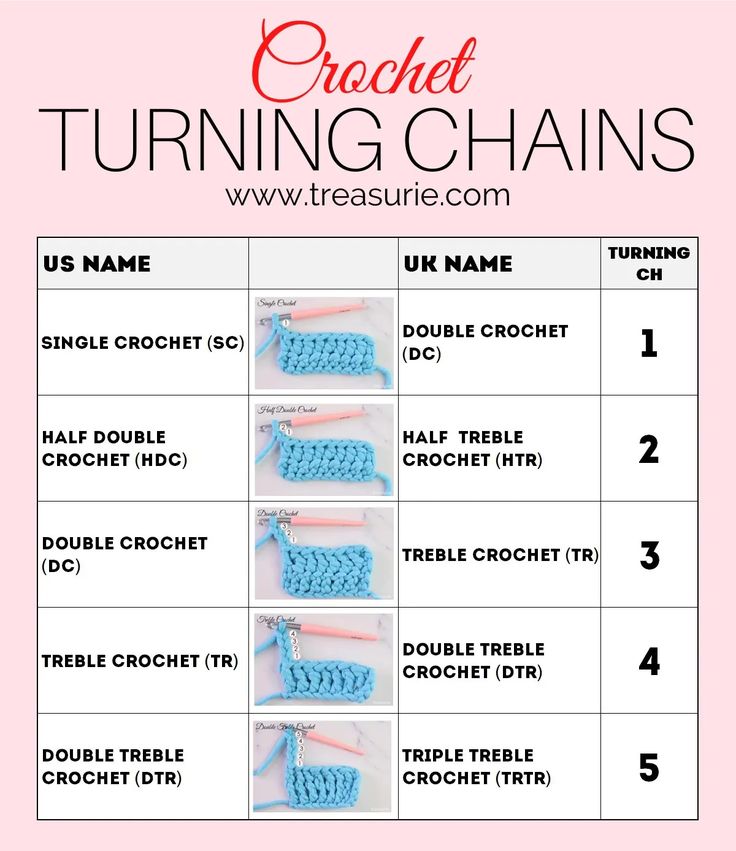
Let's say you're working in SC and you have 10 stitches. To create your turning chain, you would typically chain 9. This is because each SC takes up 1 loop, so by chaining 9, you're essentially making up for the 10th stitch that you didn't create when you turned your work.
Variations of the Turning Chain
While the basic turning chain is the most common, there are variations of it based on the type of crochet stitch you're working with. The number of chains you create for your turning chain can vary, but the most important thing is to maintain the correct tension and direction of your stitches.
For instance, when working in double crochet (DC), you might create a turning chain of 2 instead of 1, as each DC takes up 2 loops. Always ensure you're following the instructions for the specific pattern or stitch you're working with to avoid common crochet mistakes.


The Role of the Turning Chain in Different Crochet Projects
The turning chain is a fundamental part of many crochet techniques and patterns. It's used extensively in rows and when working in the round, ensuring that your stitches stay inline and maintain an even tension.
For those interested in learning more about the traditional role of the turning chain, understanding how it affects the tension of your work, and how it's applied in different crochet patterns can be incredibly helpful. It's a key technique that opens up a world of projects and stitches to explore.
The Turning Chain in Amigurumi
Amigurumi, the Japanese art of knitting or crocheting small, stuffed yarn creatures or anthropomorphic objects, heavily relies on the turning chain. Often, the Magic Ring technique, which involves a turning chain, is used to create the initial circle that forms the base of these creations.


When working in the round in amigurumi, the turning chain helps keep your stitches even and prevents them from twisting. It's a crucial technique that ensures your amigurumi remains neatly rounded and stops it from becoming a tangled mess.
The Turning Chain in Granny Squares
Another classic crochet project that relies heavily on the turning chain is the granny square. These versatile squares can be used to create blankets, pillows, and even clothing. The turning chain is used at the start of each new round, helping to maintain the integrity of the square and keeping everything evenly aligned.
In a granny square pattern, you'll typically see instructions to 'chain 3' (or 4, depending on the pattern) to turn your work. This is your turning chain, helping you to switch from one round of granny clusters to the next smoothly.
Now that you understand the function and importance of the turning chain, you're well on your way to becoming a crochet pro! Practice makes perfect, so don't be afraid to start incorporating this technique into your projects. Who knows, you might just find your next favorite stitch or pattern along the way!
Related Articles
Understanding the Turning Chain in Single Crochet
The turning chain, often abbreviated as TC or tch, is a fundamental element in many crochet patterns. It's a simple series of chains thatediation occurs...

Understanding Single Chain Crochet: A Comprehensive Guide
Crochet, a versatile and ancient textile craft, is beloved by creators worldwide for its ability to transform yarn into intricate and functional pieces. At the...

Unveiling the Simplest Paint for Novices: Your Beginner's Guide
Embarking on your first paint project can be a daunting task, but it doesn't have to be. Choosing the right paint can significantly simplify the process...
Unraveling the Mystery: The Purpose of a Turning Chain in Crochet
The turning chain in crochet, often shortened to 'tc', serves a pivotal role in this beloved textile craft. But what exactly is its purpose, and why is it an...

Understanding Rolling Covered Calls: A Beginner's Guide
When exploring the intricate world of options trading, you might come across the term "rolling a covered call option." It's a strategy that combines the...
Crochet Turning Chain Explained: What is it and How to Do it
Ever found yourself in the midst of a crochet project, grappling with a seemingly insurmountable grub of yarn? Fear not, for there's a simple, elegant solution...