Mastering Crochet: What is a Turning Chain & Why It's Essential
Embarking on a crochet venture? Whether you're a seasoned yarn whisperer or a curious novice, understanding the humble yet essential "turning chain" is a must. This simple stitch holds the key to shaping your projects, from lending depth to granny squares to creating pinch pleats in a beret.
In crochet, a turning chain prepares your work for the next row, ensuring your stitches align correctly and maintains even tension. It's the secret instigator that makes your fabric grow in the right direction. But what exactly is it?
Understanding the Turning Chain
The turning chain, often abbreviated as "ch" or "ch-sp" (for chain space), is a specific sequence of chains that functions as a chain stitch. It provides the foundation for your next row of stitches, offering a loop to work into, like a hook in knitting.


It's crucial to note that the turning chain isn't just a chain stitch. The number of chains in a turning chain corresponds to the number of stitches in the previous row. This ensures that your stitches align perfectly, preventing ladders or unequal stitches, which can distort your project.
How to Work a Turning Chain
To create a turning chain, you'll first need to understand the basic chain stitch. Here's a simple breakdown:


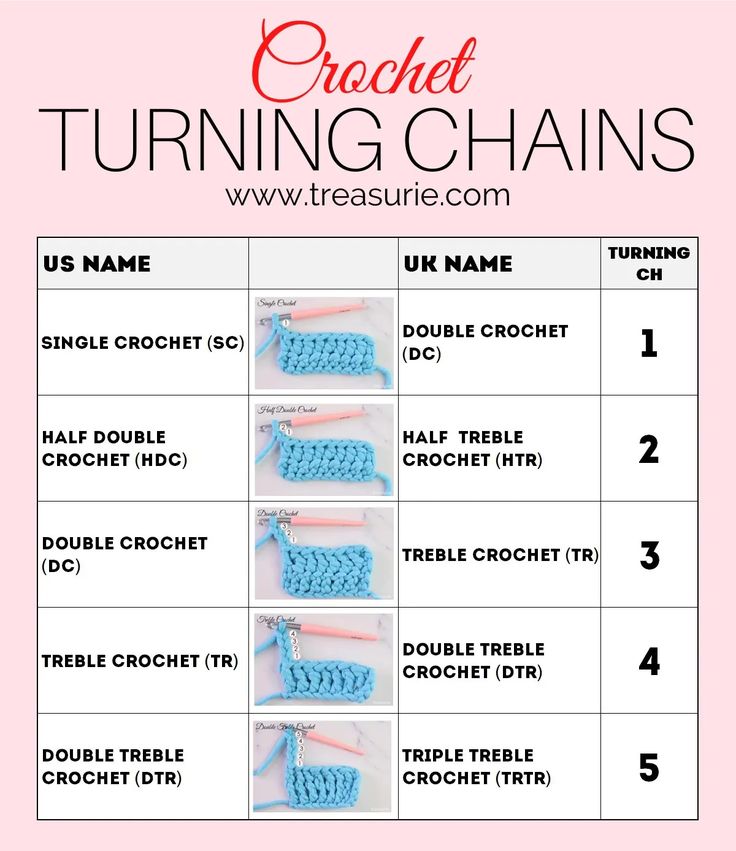
- Crochet a chain stitch (yarn over hook, insert hook into stitch, yarn over, and pull up a loop).
- Repeat step 1 until you have the desired number of chains.
For a turning chain, the number of chains is determined by the number of stitches in the previous row. For example, if you have 10 double crochet stitches in your row, you would create a turning chain of 10.
Adjusting for Gauge and Stitch Type
While the basic rule of thumb is one chain for each stitch, it's essential to consider your stitch type and gauge. Some stitches, like the single crochet, require a slightly longer turning chain to maintain the correct gauge. This is often a chain of 2, sometimes called a "turning chain-2".
Adjusting your turning chain can help you achieve your desired gauge and avoid\begin{it} gauging issues. Experiment with different stitches and turning chains to find the perfect balance for your unique style.


The Many Faces of the Turning Chain
The turning chain isn't just a helper stitch. It also has a decorative side. Used strategically, it can create visually appealing effects, like the classic ripple stitch or lacy patterns. It can even mimic other stitches, like the half-double crochet, when worked into the first loop only.
Moreover, different crochet cultures and traditions have their unique ways of working a turning chain. Some prefer the chain space, while others opt for the chain stitch. Understanding these variations can enrich your crochet journey and provide inspiration for new projects.
Chain Space vs. Chain Stitch
The chain space or chain-1 is the most common turning chain. It's a single chain that doesn't count as a stitch, but rather a space to work into. This is the turning chain we've discussed so far.


On the other hand, the chain stitch is a loop created by working a chain stitch into the top of the previous stitch or chain. This turning chain counts as a stitch and can significantly affect your project's gauge. Both methods serve their purpose and can be used interchangeably, depending on your project's needs.
Peter Pan Collar: A Turning Chain Classic
One iconic example of the turning chain's decorative potential is the Peter Pan collar. This archetypal collar uses turning chains to create the signature V-neck shape. The key to this design is working larger turning chains (chain-4) at the base of the neck, tapering to smaller chains (chain-1) at the points.
This nifty trick demonstrates how the simple turning chain can maneuver your crochet fabric, creating complex shapes and patterns with ease. It's a testament to the versatility and power of this often-overlooked stitch.
As you continue your crochet journey, remember that mastering the turning chain is not just about understanding a technique. It's about unlocking a new dimension in your craft, a world of possibilities that will transform your projects from ordinary to extraordinary. So, go forth, embrace the turning chain, and let your crochet dreams take flight!
Related Articles
Understanding Turning Chains in Crochet: A Beginner's Guide
Embarking on your crochet journey can be incredibly rewarding, but it's also packed with new terms and techniques to learn. One such term you might come across...
Unraveling the Mystery: The Purpose of a Turning Chain in Crochet
The turning chain in crochet, often shortened to 'tc', serves a pivotal role in this beloved textile craft. But what exactly is its purpose, and why is it an...
Crochet Turning Chain Explained: What is it and How to Do it
Ever found yourself in the midst of a crochet project, grappling with a seemingly insurmountable grub of yarn? Fear not, for there's a simple, elegant solution...
Understanding the Turning Chain in Single Crochet
The turning chain, often abbreviated as TC or tch, is a fundamental element in many crochet patterns. It's a simple series of chains thatediation occurs...

Mastering Adult Life: Essential Life Skills Activities
Life skills are essential for navigating the complexities of adult life. Unlike academic or vocational skills, these are practical abilities that help...

Do You Crochet into the Turning Chain
When embarking on a crochet project, one of the most fundamental techniques you'll encounter is the turning chain. But the million-dollar question that often...